Start with choice
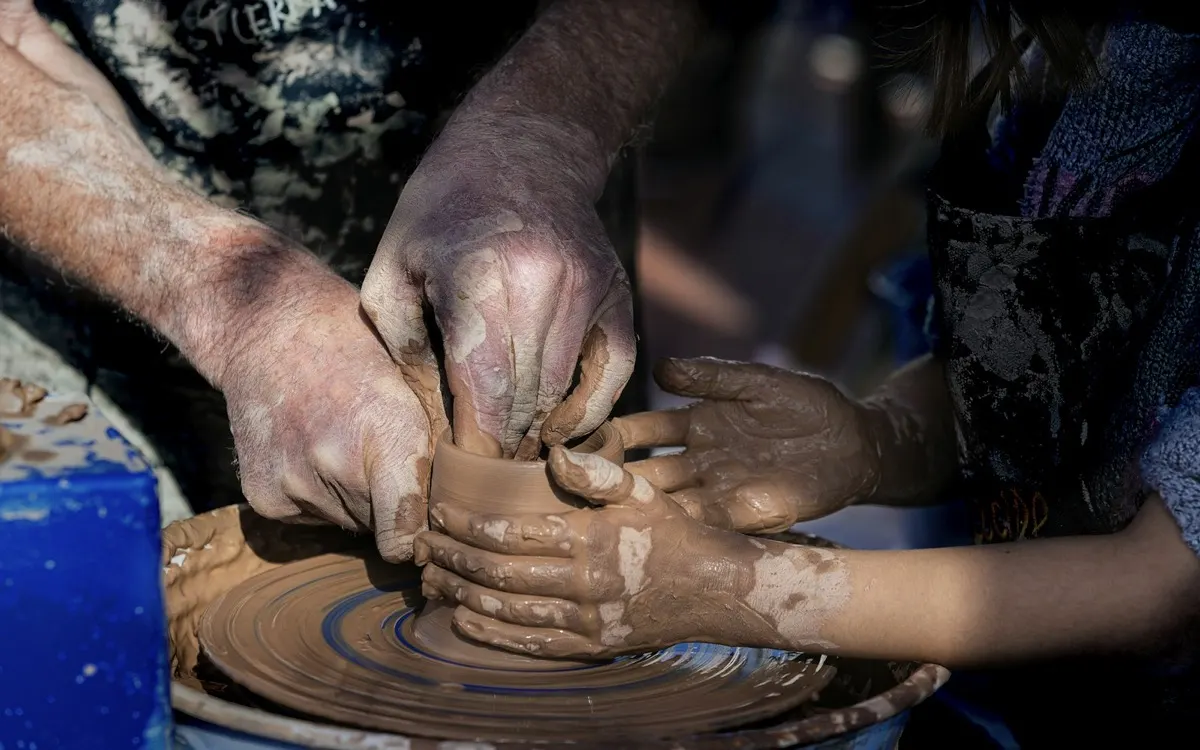
Not everyone enjoys touching wet clay. Offer a tool, another material or the option to watch. Disliking a texture does not require psychological interpretation.
A small creative task
Try making a form that stands and one that lies down. Change its support and thickness. Exploring volume can simply be play without a hidden therapeutic goal.
Prepare the space
Follow age recommendations and manufacturer instructions. Prepare a surface that is easy to clean. Avoid unfamiliar powders and materials intended only for professional workshops.
Keep or reshape?
Agree whether to keep the result, photograph it privately or turn it back into a lump. Do not insist on preserving everything; the creator can choose to change it.
Support and space
Unlike a flat page, a three-dimensional form takes up space and has weight. In creative play, notice what supports it, how it looks from different angles and where it touches the table. These are observations about materials, not symbolic tests of personal stability.
Hands and tools
Creators may use palms, a stick or a mould when suitable for the material and age. Direct skin contact need not be required. Calling something sensory does not mean the same touch is pleasant for everyone or mandatory in the activity.
Changing an idea
A form may fall or crack; first consider ordinary material properties. At home, reshape it, add a base or switch ideas. Every construction failure does not need to become a lesson about overcoming psychological difficulties.
A photograph is not the experience
A photograph shows one angle without weight, movement or the sequence of decisions. If the creator wants a record, invite a short caption in their own words. An outsider should not infer someone's feelings solely from the finished object's appearance.
Three dimensions change planning
A three-dimensional object can be turned, placed beside another or given a different base. Imagine two shapes of equal height, one wide and one narrow. Making them stand may require different distributions of material. This makes the interaction between an idea and physical conditions visible. In a drawing, an object can appear to float; in modelling, without additional support, that becomes a different construction problem. The comparison explains why material choice changes the process without psychologically symbolising every movement. Start by considering weight, proportion, balance and space as actual properties of a physical object.
Sequence and traces of transformation
During modelling, a lump may become a slab, the slab a fold and then a lump again. The finished object cannot show every transition. If the creator wants to discuss the process, ask about a moment the plan changed: what they noticed, wanted and decided to try. In an invented example, someone begins with a cup but makes a boat because they enjoy the elongated shape. This may remain an artistic decision. Every change does not have to correspond to a life conflict or reveal a hidden need to be interesting enough for conversation.
An example from clinical research
A randomised study of 106 adults with depression compared a six-week clay art therapy programme with other visual art activities. Authors reported advantages on some measures, but follow-up lasted only three weeks. This concerns a particular format and population, not any clay activity for anyone. It also does not mean home modelling should reproduce a research schedule. When reading outcomes, distinguish the participants, care structure, measurements and follow-up period. The research-literacy chapter explores these questions further. A positive finding deserves attention alongside its boundaries rather than being reduced to either a universal promise or a reason to dismiss uncertainty.
Supporting a hand versus directing an idea
Someone may need help holding a base or using a tool. Ask which part of the action they want assistance with and which decisions remain theirs. For example, “I will hold the board, and you tell me when to turn it”. This separates physical independence from authorship. Do not reshape someone's form without permission merely to make it neater. An adult creating alongside a child can demonstrate an option on their own piece of material. Continue with the chapters on parents, sensory play and materials to explore the different sides of this practical agreement.
Material and technique names
“Modelling” can refer to different mixtures with different drying, storage and use instructions. Name the actual product rather than transferring habits from one material to another. Simple verbs describe the process: press, stretch, join, divide and smooth. They identify actions without judging a person. When two pieces are joined, first discuss whether the construction holds and what its creator wants. If the creator offers a personal association, there is then a basis for moving from the technical discussion to what it means to them.